
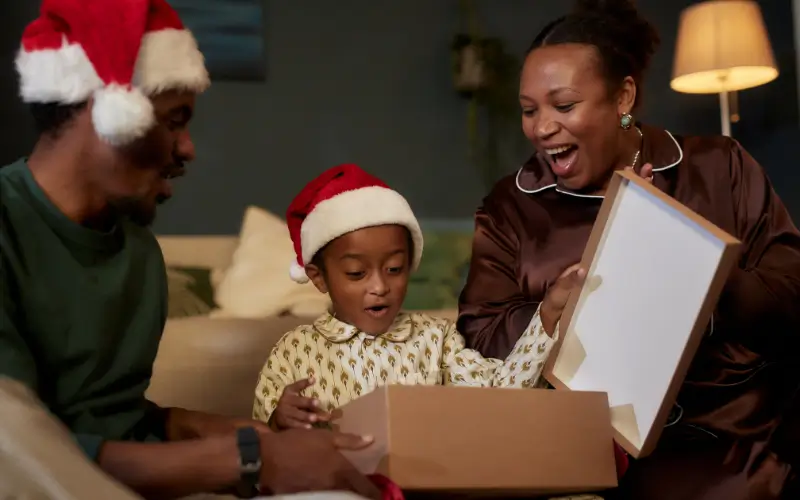
Christmas is a time for joy and connection, yet choosing a meaningful Christmas present for a child can feel overwhelming. Shelves are filled with bright options, but not every toy holds a child’s attention or encourages lasting growth. The best presents combine excitement with purpose, offering both delight and development. A thoughtful gift celebrates who the child is, what they enjoy, and how they see the world.
Educanda encourages this kind of thoughtful giving. Each resource is designed to inspire learning through play, helping children explore, imagine, and build confidence while having fun. From creative kits to hands-on activities, these our selection of Christmas presents nurture curiosity and growth, turning holiday moments into lasting opportunities for discovery.
Table of Contents
Choose the Perfect Christmas Present for Every Child
The best Christmas presents are those that match a child’s personality and stage of growth. A thoughtful gift reflects how a child learns, explores, and connects with the world. When choosing, it helps to look past trends and focus on what genuinely engages their curiosity and supports meaningful play. The section below offers a short overview, followed by a more detailed explanation later in the article.
Personal Interests
Every child shows their interests early, whether through creativity, movement, stories, or problem-solving. Paying attention to what naturally captures their focus can guide your choice. Gifts that match these interests feel more personal and rewarding, giving children a sense of ownership in their play.
This approach also helps the gift hold their attention long after the excitement of Christmas morning fades. A child who loves building may enjoy construction toys and organising, while one who enjoys music might appreciate something that involves rhythm or sound exploration.
Age Group
Age plays a practical role, but developmental stage matters just as much. The right level of challenge keeps children motivated and prevents frustration. Younger children benefit from tactile play and repetition, while older ones enjoy projects that involve experimentation, logic, or collaboration.
Considering stage also ensures safety and usability. Toys designed for specific age ranges provide both enjoyment and developmental benefit, giving children something they can grow with throughout the year.
Learning Focus
Each toy or resource offers opportunities for growth in different areas of learning. Some gifts strengthen coordination and fine motor control, while others develop language, numeracy, or creative thinking. Recognising these subtle learning elements helps you choose toys that nurture essential skills without feeling like structured lessons.
When play aligns with learning, children stay engaged for longer periods and develop confidence as they master new tasks. A simple puzzle, for example, builds spatial awareness, while storytelling games encourage vocabulary and imagination.
Shared Experiences
Some of the most meaningful gifts encourage shared play. Games, craft projects, and collaborative activities allow families, friends, or classrooms to create together. These moments help children practice communication, empathy, and teamwork in a natural way.
Shared experiences also strengthen connection. Whether painting side by side, building together, or solving a puzzle as a group, these activities create memories that last well beyond the holiday season.
Gifts That Reflect a Child’s Personality
The most memorable gifts connect with what children genuinely enjoy. By watching how they play and interact, parents and teachers can better understand their personalities and what brings them excitement. Choosing gifts that match these interests encourages confidence, creativity, and focus.
• Notice how they spend their free time: unstructured play often shows what holds their curiosity. A child who builds or sorts may enjoy patterns and design, while one who paints or tells stories may prefer creativity and imagination.
• Observe what makes them proud: children often repeat the activities that give them a sense of success. Gifts that build on these moments of pride encourage persistence and emotional growth.
• Think about where they feel most comfortable: some children thrive outdoors with movement and exploration, while others prefer calm, focused play indoors. Matching the setting of play to the gift helps them feel at ease and engaged.
• Choose gifts that extend existing interests: the best gifts deepen what a child already enjoys. For example, a child who loves pretend play might appreciate new props or themed sets that expand their storytelling.
• Offer opportunities for choice: open-ended toys or materials that can be used in multiple ways give children freedom to direct their own play and develop independence.
Christmas Present Ideas by Age Group
Children’s interests and abilities change quickly as they grow. The right gift supports where they are developmentally while keeping play enjoyable and creative. By understanding what matters most at each stage, parents, teachers, and therapists can choose presents that inspire curiosity, independence, and confidence.
| Age Group | Key Developmental Focus | Gift Ideas |
| Toddlers and Preschoolers (1–4 years) | This stage is defined by exploration and sensory discovery. Children learn through touch, sound, and movement, building coordination, balance, and early problem-solving skills. They begin to imitate daily life, use their imagination, and develop early language. Repetition helps strengthen memory and confidence. | Sensory toys, stacking sets, shape sorters, role-play sets, textured puzzles, and musical instruments. |
| Foundation Phase (5–9 years) | Curiosity grows into creativity and structured thinking. Children start linking cause and effect, develop reading and number skills, and learn to work with others. This is the stage where persistence and teamwork start forming. Play that mixes imagination with logical reasoning helps them gain confidence in learning. | Art and craft sets, early STEM kits, construction blocks, puzzles, board games, and literacy or numeracy resources. |
| Older Children (10+ years) | Older kids seek independence and challenge. They enjoy activities that require concentration, planning, and creativity. Logical reasoning and experimentation become stronger, and they start to value personal achievements. Play that encourages critical thinking or long-term projects supports focus and self-discipline. | Science experiments, advanced building kits, creative writing materials, strategy games, and detailed art projects. |
| All Ages | Across every stage, play remains an opportunity to connect and grow. Group activities strengthen social awareness, empathy, and patience. Family play or classroom games also support communication and emotional development while creating shared memories. | Cooperative board games, family activity kits, collaborative art projects, and classroom group sets. |
Christmas Presents With a Learning Focus
Children learn through experience long before they sit in a classroom. The toys and resources they use shape how they think, communicate, and approach challenges. A thoughtful Christmas present can do more than entertain; it can strengthen foundational skills that support learning for years to come. By choosing gifts that nurture specific areas of development, parents and teachers can help children grow with confidence and curiosity.
Research from the Harvard Center on the Developing Child highlights how play-based learning supports creativity and emotional growth, making thoughtful gifts even more meaningful.
Language and Literacy
Language forms the foundation for all learning. When children speak, listen, and begin to recognise words, they build the skills needed to understand, connect, and express themselves. Early exposure to language through stories, rhymes, and conversation develops memory, sequencing, and comprehension.
Educational gifts that encourage storytelling, role play, or reading readiness are especially valuable. Picture books, magnetic letters, word games, and story-building cards help children associate words with meaning and sound. For younger learners, singing or using puppets can spark imagination while improving pronunciation and rhythm. As children grow, more structured tools such as literacy boards or sentence-building activities strengthen fluency and creative writing.
Language-focused play also builds social confidence. When children share stories or act out scenes, they learn to listen, take turns, and communicate clearly. These are lifelong skills that support both learning and relationships.
Numeracy and Logic
Mathematical thinking begins long before children learn formal equations. When they sort, compare, or build, they start to recognise order, quantity, and relationships between objects. These early experiences create the foundation for number sense, pattern recognition, and reasoning.
Games and activities that use shapes, sequences, or counting naturally strengthen logic. Matching sets, construction toys, and puzzles teach children to look for structure and consistency. Board games that involve simple strategy introduce the idea of planning ahead, while measuring or cooking activities can make numbers part of everyday life.
For older children, challenges such as logic puzzles, problem cards, or basic STEM kits add layers of reasoning and persistence. They learn how to test ideas, correct mistakes, and look for multiple solutions. This kind of thinking supports later skills in mathematics, science, and real-world problem solving.
Mathematical play also nurtures patience. When children learn that solving a problem may take time, they begin to appreciate effort and progress, not just outcomes.
Science and Discovery
Curiosity is one of the strongest drivers of learning. Children are natural explorers, eager to understand how things work and why changes occur around them. The right toys and materials can turn that curiosity into discovery, helping them form connections between observation, cause, and effect.
At an early stage, exploration often begins through sensory play. Water, sand, and magnets help children experiment with texture, movement, and reaction. These activities introduce basic scientific thinking by encouraging them to ask questions and notice results. Simple tools like magnifiers or balance scales make early experimentation feel like play rather than instruction.
As children grow, structured discovery takes on new meaning. STEM kits, simple experiments, and building activities allow them to test ideas and predict outcomes. Through this kind of hands-on play, they begin to apply reasoning and recognise that their actions can influence results. It is the foundation for understanding scientific principles later in life.
Science-based play also builds confidence. When children explore freely and reach conclusions through their own observations, they gain a sense of control over learning. Encouraging discovery helps them view the world with curiosity instead of hesitation.
Creativity and Expression
Creativity helps children make sense of their thoughts and emotions. It allows them to explore new ideas, express feelings, and develop confidence in their individuality. When children paint, build, sing, or act, they are learning how to think independently and approach challenges with imagination.
Art, music, and open-ended craft materials encourage freedom and experimentation. They teach planning, patience, and reflection as children move from ideas to finished creations. For younger children, simple tools like finger paints or clay develop fine motor control while encouraging exploration. For older children, projects that involve design, performance, or mixed media foster deeper self-expression and problem solving.
Creative play also supports emotional well-being. When children create freely, they find safe ways to express joy, frustration, or excitement. This kind of expression helps build resilience and a sense of self that benefits both learning and social growth.
Social and Emotional Growth
Social and emotional development forms the base of every child’s ability to learn, connect, and adapt. Through play, children begin to understand their emotions and how their actions affect others. Games that involve sharing, cooperation, or teamwork help them experience empathy and communication in a natural, enjoyable way.
When children engage with others during play, they practice patience, compromise, and trust. Activities that require collaboration, such as building projects or group art, help them navigate different perspectives and build confidence in their role within a team.
Emotional awareness also develops through self-directed play. Managing excitement, frustration, or disappointment teaches children how to regulate emotions and recover from setbacks. Sensory materials, calm-down activities, or reflective storytelling can provide gentle ways to manage feelings and restore focus.
These early lessons in empathy, patience, and regulation shape how children respond to learning challenges, feedback, and new experiences. Emotional growth does not happen separately from academic progress; it determines how comfortably a child approaches every opportunity to learn.
Make This Christmas Meaningful with Educanda
The most memorable gifts are those that bring joy while supporting growth. When children play with purpose, they are not only entertained but also developing skills that help them understand the world and themselves. Every toy, puzzle, or creative set can open a small window into how they learn, think, and feel.
Educanda’s range of educational toys and classroom resources is designed with this balance in mind. Each item encourages curiosity, imagination, and discovery in a way that feels natural to children. Whether it is a hands-on activity for the classroom, a creative project for home, or a sensory set for quiet reflection, the goal remains the same: to make learning part of everyday play.
Christmas presents that inspire exploration and creativity leave a lasting impression long after the holidays end. By choosing gifts that support both happiness and growth, families and teachers can help children carry that sense of wonder into the year ahead.
Frequently Asked Questions
What kind of Christmas present is best for a child who already has a lot of toys?
When a child has many toys, choose something that offers a different type of experience rather than adding to what they already own. Look for gifts that encourage interaction, creativity, or problem solving. Open-ended toys, craft materials, or family games often stand out because they create new opportunities for engagement. Experiences such as activity kits or projects that involve learning a new skill also feel special and memorable.
What do kids mostly want for Christmas?
Children usually want something that feels exciting or new to them. That might be a toy related to a favourite character, a creative set that lets them make something of their own, or something they can share with friends. What matters most is that the gift feels personal and fun. Even simple presents, when connected to what the child enjoys, can create lasting happiness.
What is the most requested Christmas present in 2025?
Trends in 2025 show children are drawn to creative kits, building sets, science experiments, and toys that mix technology with imagination. Outdoor and active toys are also popular because they give children space to explore and play away from screens. Gifts that encourage curiosity or collaboration tend to be requested most often this year.
What are some trending Christmas toys this year?
Creative and hands-on toys are leading this year. Popular choices include STEM sets, art and craft kits, and construction toys that allow children to build and redesign. Board games, sensory toys, and outdoor play equipment are also trending because families are seeking activities that bring everyone together during the holidays.
How can I choose something educational that still feels fun?
The best educational toys do not feel like lessons. Look for toys that invite children to explore and make choices. Games that involve problem solving, craft sets that encourage creativity, or activities that connect to real-life experiences help children learn naturally through play. Focus on how engaged and curious the child feels rather than how much information the toy teaches.
I want to buy one meaningful gift instead of many small ones, what should I look for?
Choose something that has long-term value. Look for quality materials, adaptability, and variety in use. A meaningful gift usually grows with the child, offering new challenges or uses over time. Consider an art easel, a construction set, or an educational game that the child can return to in different ways throughout the year.
How do I know if a toy is too simple or too advanced for my child’s age?
A toy that is too simple loses a child’s attention quickly, while one that is too advanced often causes frustration. The right toy will challenge the child slightly but still feel achievable. Observe how your child responds to play: if they are engaged, experimenting, and smiling, the difficulty is likely right for their stage of development.
Are educational toys suitable for holiday gifts, or do they feel too much like school?
Educational toys make excellent Christmas gifts when they are fun, colourful, and interactive. The key is to choose toys that spark curiosity instead of focusing on outcomes. A toy that teaches through play and imagination feels like an adventure rather than a lesson.
What types of toys last the longest or grow with a child over time?
Toys that adapt to different skill levels or allow creative freedom tend to last the longest. Construction sets, art materials, and role-play kits can evolve with the child. As they get older, they find new ways to use these toys, keeping them relevant and engaging year after year.
How can I choose a gift that siblings can share without fighting?
Shared-play gifts work best when each child can participate equally. Look for toys that allow multiple players, shared building, or turn-taking. Games that encourage teamwork rather than competition often reduce conflict. It also helps to choose activities where roles rotate, giving each child a chance to lead or contribute.
What are good Christmas presents for kids who prefer hands-on play instead of screens?
Hands-on learners thrive with tactile and interactive gifts. Building blocks, puzzles, art supplies, sensory play materials, and outdoor equipment are all good options. These types of gifts encourage physical engagement, focus, and problem solving while keeping playtime active and screen-free.
Are there affordable educational toys that still offer good quality?
Yes. Many affordable toys focus on creativity and open-ended play rather than expensive technology. Choose toys made from sturdy materials like wood or thick plastic, with simple designs that encourage imagination. Sets that include reusable materials or multiple play options also provide excellent value for money.
How can I find gifts that are both fun for home and useful for school?
Look for toys that build general skills such as communication, organisation, or concentration. Literacy and numeracy games, art materials, and puzzles often support what children learn in class. A gift that combines creativity with skill development becomes useful in both settings without feeling repetitive.
What gifts work well for children I do not know very well, like nieces or family friends?
Choose something universal that fits a wide range of interests. Art and craft kits, construction sets, storybooks, or board games are safe choices because they suit many personalities. Avoid very specific or character-based toys unless you know the child’s preferences. When in doubt, gifts that inspire imagination or collaboration are usually well received.


